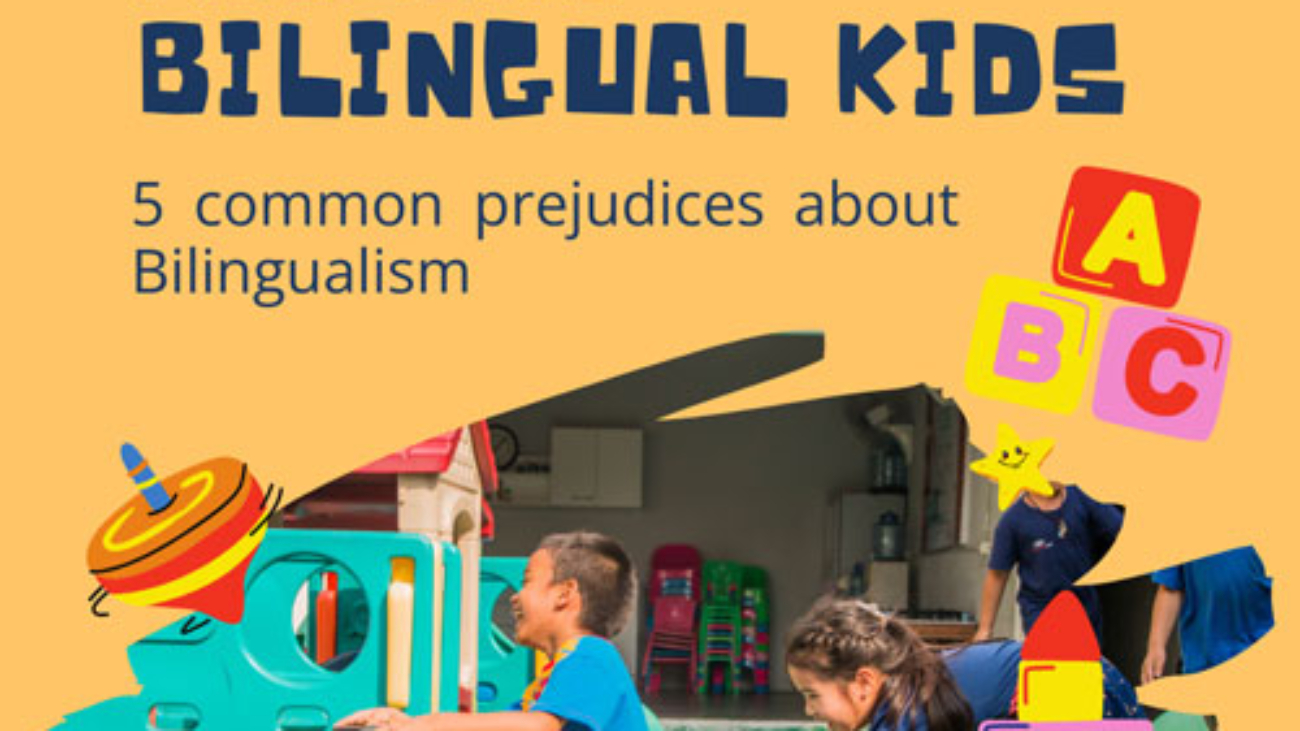
The image promotes raising bilingual children, contrasting playful children with text addressing common prejudices against bilingualism

Raising a Bilingual Child: Common Misconceptions

Raising a Bilingual Child: Common Misconceptions

Raising a bilingual child may have supporters but also opponents. There comes as an established knowledge that bilingualism is identified with several implications on child’s development. This notion stems mostly from standpoints which are deeply rooted in a tradition of monocultural and monolingualism.

Prejudice 1: Bilingualism is associated with less intelligence

Being bilingual means that you have access to two different codes for communication. It gives you a different viewpoint on the world and different perspectives of the power of words. A great volume of research has proved that bilingualism neither enhances nor limit the brain activity. However, the benefits give rise to social, lifestyle and employment opportunities.

Greek Logoped Logo

Prejudice 2: Bilingualism can lead to language underdevelopment

Generally speaking, bilingual children run almost the same language milestones as monolingual children. That is normally expected. Monolingual children have the same chances to demonstrate language impairments as bilingual children. This means that speaking two languages cannot be the underlying reason for any kind of language disorder.

Greek Logoped Logo

Prejudice 3: Bilingualism can cause personal identity issues

Children construct their personal identity based on several aspects of their life. The way we communicate might be one of them, but powerful and healthy connections with their parents are one of the most important things. In the final analysis, what is more important is to be able to express oneself in some way. As a bilingual child grows up, they tend to use one language in one situation and the other language in other situations, and this is more like a natural process than an issue.

Greek Logoped Logo

Prejudice 4: Bilingualism is identified with school underperformance

The truth is that there are several factors that make a child underperform at school. And this has not to do with the number of languages the child is exposed to. It is a common idea that a bilingual child cannot perform the same as a monolingual child because the second language usually interferes with the first one.

However, it is normal to use code mixing without necessarily being considered as a language problem.  

Greek Logoped Logo

Prejudice 5: Α second language will interfere with the first language development

This notion stems from the assumption that the brain has just enough capacity for one language to be developed. But, there is enough room in our thinking quarters for more than one language to be stored.

In fact, our thinking can be supplied from both languages. If for example a kid taught basic mathematics skills, they can transfer this ability to the other language without being retaught in that language.


is it good to speak two languages to my child

Bilingual Children: Frequent Questions

Bilingual Children: Frequent Questions

Greek Logoped Logo

Is it ok to speak to my child in two languages?

While many people believe that speaking in two languages might confuse children, it actually has positive effects as well.

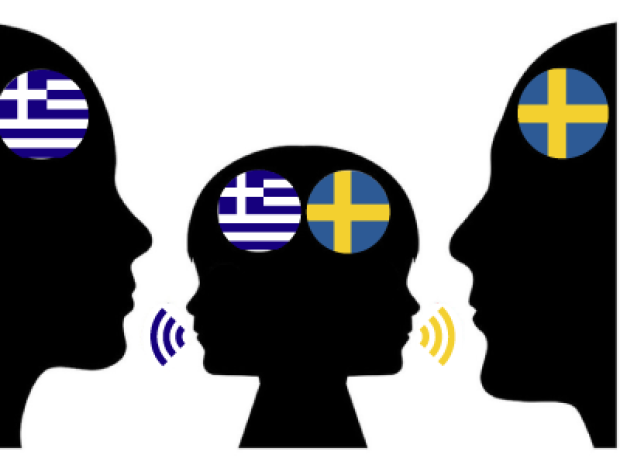
Some parents fluent in two languages might be expected to use only one of them, but it is common for such parents to use both languages with their children.

This does not happen randomly; they typically use different languages for different purposes in process called code-switching.

Code-switching is a natural process in bilingual individuals and is not a problem. It is more valuable when the child learns and uses code-switching. Furthermore, explaining something in both languages can enhance its meaning.

Greek Logoped Logo

Should we change the language spoken at home to help our children in the new country?

Moving to another country usually poses a lot of stress for children. There is so much to handle during the settling down period.

Children must deal with a different language at school, and it is not advisable for them to experience such a change at home as well. Children typically pick up the new language easily when they are outside the home.

When a family uses a specific language to communicate, it provides something solid for the children, which is difficult to change. Additionally, continuing to use the heritage language at home offers a great opportunity for children to preserve their language.
Greek Logoped Logo

Does the second language develop at the expense of the first language?

No, learning a second language does not necessarily develop at the expense of the first language

This assumption is associated with the idea that bilingualism can raise issues like mental confusion, issues in terms of majority language acquisition, identity issues and probably sense of alienation.

It is also commonly believed that as proficiency in one language increases, proficiency in the other language decreases. It seems like our brain has a certain capacity to store language and if it stores more from one language the other diminishes because there is not enough room.

The real evidence is that language attributes are not separated but they can transfer easily from one language to another. In fact, one language interacts with the other.

Νοητικές Εκτελεστικές Λειτουργίες

What is the relationship between executive functions and speech therapy?

What is the relationship between executive functions and speech therapy?

What is executive functioning?

Parents often ask questions like, “Why does my child talk so loudly?” or say, “I love that they’re so talkative, but it feels like they don’t think about the listener when they’re speaking.”

Greek Logoped Logo

More often than not, these questions can be understood through the lens of executive functions.

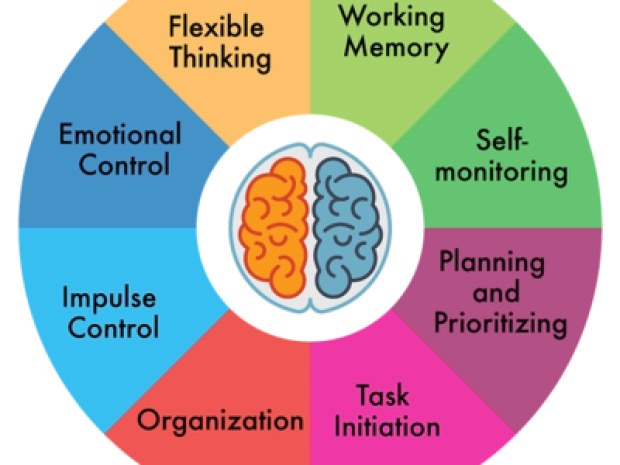
In fact executive function is a set of mental skills which help us manage everyday tasks. Executive functions include basic cognitive processes such as attentional control, cognitive inhibition, inhibitory control, working memory, and cognitive flexibility.

Understanding executive functions can help parents and teachers make sense of their child’s specific behaviors and provide strategies to help them manage these challenges effectively.

Let’s explore how speech and language are connected to executive functions.

Greek Logoped Logo

What is the relationship between executive function and receptive language?

For a child to understand verbal information, they need strong attention skills to help them filter out distractions and focus on what’s important. They also rely on working memory, to retain and process that information effectively.

Interestingly, cognitive flexibility —an essential component of executive function— is closely tied to language skills. This means that abilities like making inferences, understanding word meanings, and solving problems require the combined use of multiple executive functions.

In fact, executive functions and language skills work hand in hand. When a child struggles in these areas, they may have trouble following directions, understanding what they read, or even participating in social interactions successfully.


What is the relationship between executive function and expressive language?

Many everyday tasks that rely on expressive language also depend on executive function skills. For example, activities like retelling a story, describing an event that happened at school, or simply talking about an ordinary day all involve these abilities.

One key aspect is sequential skills, which require specific executive functions such as planning. Planning is the skill that helps individuals identify important information and present it in the correct order.

In addition to our abilities to plan and make inferences, executive functions influence our social interactions and understanding. Social cognitive skills such as regulating emotions and behavior facilitate social interaction.

Child’s Social Communication and executive function

For a child to integrate socially—both through their behavior and their use of language in different situations—they need to learn to manage their emotions and impulses.

This helps them adapt their behavior based on their surroundings. For example, they might be full of energy during recess or at the playground but understand that they need to be quieter in the library. It also means they can handle losing a game without overreacting.

The same goes for how they use language. If a child struggles with these skills, they may have a hard time seeing things from someone else’s perspective. You might notice them getting too close to others’ personal space or speaking without much of a “filter.”


Greek-Logoped-Myths-about-bilingual-children

4 myths for bilingual children

• 4 Myths About Bilingual Children

How Children Learn More Than One Language

Children become bilingual in two ways: through Simultaneous Learning and Sequential Learning.

Greek Logoped Logo

Simultaneous learning occurs when a child grows up in a bilingual environment from birth or when a second language is introduced before the age of 3.

Children who learn two languages simultaneously reach the same developmental language milestones as children who learn only one language.

Although bilingual children may take a little longer to say their first words, they usually start speaking within the typical age range. At first, a bilingual child may mix the two languages, but over time, they develop the ability to separate them.

Greek Logoped Logo

Sequential learning happens when a child learns a second language after having already established their first language, typically after the age of 3.

This often occurs in cases of migration or when a child starts school in a different language from the one spoken at home. In this situation, we can expect the child to go through the following stages:

  • Initially, they will continue using the language spoken at home.
  • They may go through a silent or nonverbal period, which can last from a few weeks to a few months. Younger children tend to stay in this stage longer than older ones.
  • They will start using words and short phrases, mostly memorized rather than constructed by themselves.
  • Eventually, they will begin forming their own sentences. As they develop greater fluency, they may still make grammatical mistakes, often influenced by their first language.

  • Myths About Bilingualism

    It is important to understand when a child’s language mistakes are due to a language disorder and when they are simply a natural part of bilingual development. That’s why we need to clarify some common myths about bilingualism:

    Myth 1: "Bilingualism leads to language confusion."

    It is completely normal for a child learning two languages simultaneously to use words or sentences from both languages in the same conversation. When they don’t know a word in one language, they may use the equivalent word in the other language to communicate.

    What matters is that they follow grammatical rules. Research has shown that children who mix languages still respect the syntactic rules of each language.

    Myth 2: "Parents must follow the 'one parent – one language' rule."

    Many parents, wanting to help their child, decide that each parent should speak only one specific language to the child. While this approach is an option when raising a bilingual child, there is no evidence that it is necessary or significantly more beneficial.

    Parents can use whichever language they feel comfortable with when speaking to their child—even mixing both languages—since language mixing is a natural stage of bilingual development.

    Myth 3: "Young children learn languages like sponges."

    Not exactly. Children learning a second language need about 3-4 years of exposure to develop conversational skills and 7-8 years to reach academic proficiency. As we can see, learning a language is a long-term process.

    Myth 4: “Learning a second language makes language difficulties worse.”

    This is not true. Research has shown that learning a second language does not worsen a child’s language disorder. Studies comparing bilingual and monolingual children with language disorders have found that the only difference is that bilingual children simply speak an additional language.


    μωρό που κάνει λογοθεραπεία πρώιμης παρέμβασης

    Mistakes of parents regarding early intervention

    Λάθη γονέων σχετικά με την πρώιμη παρέμβαση

    Η έγκαιρη διάγνωση και παρέμβαση οποιασδήποτε δυσκολίας ή επιβράδυνσης στην ανάπτυξη του λόγου και της ομιλίας στα παιδιά είναι πολύ σημαντική, για την μετέπειτα σχολική του πορεία, αλλά και για την επικοινωνία του γενικότερα. Πολλοί γονείς υιοθετούν την προσέγγιση «ας περιμένουμε λίγο». Αυτό είναι σφάλμα. Για κάθε μήνα που περιμένεις, το παιδί μένει ακόμα περισσότερο πίσω στα στάδια που κανονικά θα έπρεπε να είχε κατακτήσει.

    Greek Logoped Logo

    Λάθη που κανουν οι γονείς απο έλλειψη ενημέρωσης

    Σε συζητήσεις που κάνουν οι γονείς μεταξύ τους ακουγεται συχνά:

    «κι εμένα ο μικρός μου, δεν μπορούσε να πει το σίγμα κάποιες φορές αλλά το διόρθωσε μόνος του μεγαλώνοντας» ή «άργησε να μιλήσει και τελικά μετά τα 2,5 ανέπτυξε την ομιλία του κι όλα καλά».

    Αυτό είναι σφάλμα. 

    Κάθε παιδί έχει διαφορετικό βιολογικό και αναπτυξιακό ιστορικό. Οι γονείς δεν μπορούν να βασίζονται σε μια επιφανειαξή σύγκριση με παιδιά φίλων και γνωστών. Είναι προτιμότερο, οι γονείς να αναζητούν την εκτίμηση του ειδικού.

    «δεν μιλάει ακόμα καθαρά, αλλά όταν πάει σχολείο και μάθει τα γράμματα, θα τα πει τότε σωστά».

    Λάθος.

    Ένα παιδί που μπερδεύει φωνήματα στην ομιλία του, θα μπερδεύει και τα αντίστοιχα γράμματα αργότερα στο σχολείο.

    «Ας πάμε να ρωτήσουμε τον παιδίατρο».

    Ανεπαρκές.

    Ο παιδίατρος είναι εξειδικευμένος σε ιατρικά θέματα, γενικής παθολογίας. Η εκπαίδευσή του σε καμία περίπτωση δεν επαρκεί για να διαγνώσει μια καθυστέρηση στην ομιλία. Οι συνεπείς παιδιατροι παραπέμπουν τα ζητήματα ομιλίας σε Λογοθεραπευτή.

    Greek Logoped Logo

    Οι έρευνες έχουν δείξει:

    Μια ενδεχόμενη καθυστέρηση στο λόγο ή την ομιλία μπορεί να επηρεάσει σε μεγάλο βαθμό τη σχολική επίδοση του παιδιού. Για να μπορέσει το παιδί να ανταπεξέλθει στις σχολικές υποχρεώσεις, χρειάζεται να χτίσει πρώτα πολυάριθμες προσχολικές ικανότητες, οι οποίες συμβαίνουν πριν τα 5 του χρόνια.


    Η γλωσσική ανάπτυξη του παιδιού συσχετίζεται με ένα μεγάλο εύρος δεξιοτήτων, όπως η προσοχή, η ακουστική αντίληψή και διάκριση, η κατανόηση, η επίλυση προβλημάτων, η επικοινωνία κι η έκφραση συναισθημάτων.


    Οποιαδήποτε γλωσσική διαταραχή μπορεί να έχει αρνητικό αντίκτυπο στην κοινωνική υπόσταση του παιδιού και στην αυτοπεποίθησή του. Όταν ένα παιδί νιώθει ότι δεν γίνεται κατανοητό, μπορεί ηθελημένα να αποφεύγει τις ευκαιρίες για κοινωνική επαφή, γιατί απαιτεί χρήση της γλώσσας.

    Γι’ αυτό ακολουθείς πάντα το μητρικό ένστικτο! ως γονιός μπορείς να μάθεις στρατηγικές που θα βοηθήσουν το παιδί να εξελίξει τις γλωσσικές του ικανότητες.


    Λογοθεραπεύτής κάνει άσκηση διαβάσματος σε μωρό

    How to read to your baby

    How to read a story to your baby

    If you want to introduce your child to the wonderful world of books, start early!

    Babies benefit from being surrounded by printed language right from the beginning. When books are a part of their everyday life, they quickly pick up new words and start to understand that the sounds we say are connected to the marks on the page.

    Later, before they even learn to read and write, they begin to realize that each sound matches a letter. Stories play an important role in this process, too!

    Greek Logoped Logo

    Reading with Babies Under 18 Months

    At this stage, your baby won’t understand the storyline—and that’s perfectly okay! The goal is not to finish the book but to enjoy quality time together.

    Point and Name Things

    Point to pictures in the book and say the names out loud. This helps your baby connect the images to real words. Over time, they’ll link the pictures in the book to real-life objects. You can also make animal noises or environmental sounds (like “moo” or “vroom”) to make it more fun.

    Greek Logoped Logo

    Use Gestures and Expressions

    Babies love big gestures and animated facial expressions. These grab their attention and encourage imitation. Gestures also help explain words like *big* and *small*. For example, if the book shows a big moon, spread your arms wide to show “big.” If something is small, use your fingers to make a tiny circle.

    Choose Books with Textures

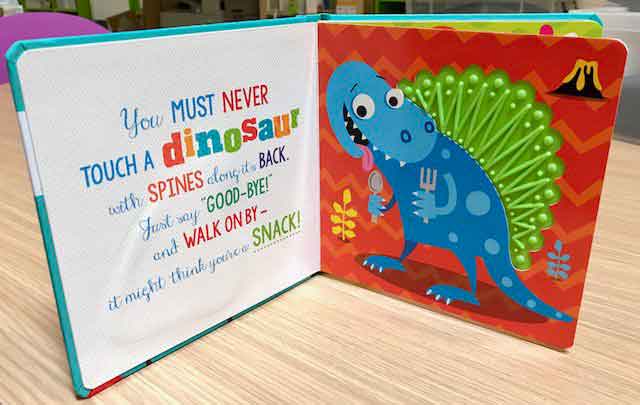
    Books with different textures are great at this age! When your baby touches soft, rough, or bumpy surfaces, they learn words like *soft*, *hard*, and *rough* while developing sensory awareness.

    υλικό λογοθεραπείας - βιβλίο για μωρά
    Greek Logoped Logo

    Let Your Baby Take the Lead

    Encourage your baby to turn the pages themselves. Watch which pages they enjoy the most. And don’t worry if they chew on the book—it’s normal at this age and part of how they explore the world.

    Keep Language Simple

    Everything is new to your baby, so keep it short and sweet—just two or three words at a time. Speak slowly and use lots of facial expressions and big gestures. Babies have short attention spans, so simple, expressive language works best.

    Greek Logoped Logo

    Repeat, Repeat, Repeat

    Repetition is key! Babies need to hear the same words and see the same pictures over and over to learn them.

    Books and Motor Skills

    Reading isn’t just about words—it can help with physical development too! A big book on the floor encourages your baby to sit up or push up on their elbows, strengthening their muscles while looking at pictures. Smaller books are easier to hold and help develop fine motor skills like grasping and turning pages. When your baby starts standing with support, you can even show them books while they hold onto their crib.


    Λογοθεραπεύτρια κάνει άσκηση διαβάσματος σε παιδί

    Reading with your child (over 18 months old)

    How to Read to Toddlers (over 18 Months)

    Reading with toddlers is more than just reading words—it’s an interactive experience that builds language, thinking skills, and emotional understanding. Here are some simple ways to make storytime fun and meaningful:

    Show Emotions in Your Reading

    Bring the story to life by using different voices for each character and matching your facial expressions to what’s happening. If the character is sad, look sad. If they’re happy or surprised, show it on your face! This makes the story exciting and helps your child understand feelings.

    Get Them Involved

    Toddlers are starting to build their vocabulary, so invite them to join in. Pause during the story and let them fill in a word or two. Ask simple questions like:

    * “Where is Spot?”

    * “What is he doing?”

    Encourage your child to ask questions too. If they ask something, don’t rush to give the answer. Instead, guide them to figure it out by describing what you see. For example, if they ask, “Where are they going?”, you could say:

    “I see a fishing rod and a bucket, and they’re near a river. I think they might be going fishing.”

    This helps your child learn to think, make connections, and look for clues in pictures.

    Greek Logoped Logo

    Play the Guessing Game

    Before you even open the book, look at the cover together and guess what the story might be about. Is it about a farm, the sea, or maybe school? If your child isn’t sure, think out loud and show them how you figure it out.

    While reading, keep guessing! Ask questions like:

     “What do you think will happen next?”

    This makes reading more exciting and builds prediction skills.

    Teach New Words in Context

    Learning new words isn’t just about memorizing them—it’s about understanding what they mean and how they fit into the world. When introducing a new word, explain what it is and what it’s used for. For example:

     Instead of just saying, “This is a hammer,” you could say, “A hammer is a tool we use to build things.”

    This helps your child connect new words to categories and real-life uses, which strengthens comprehension and thinking skills.